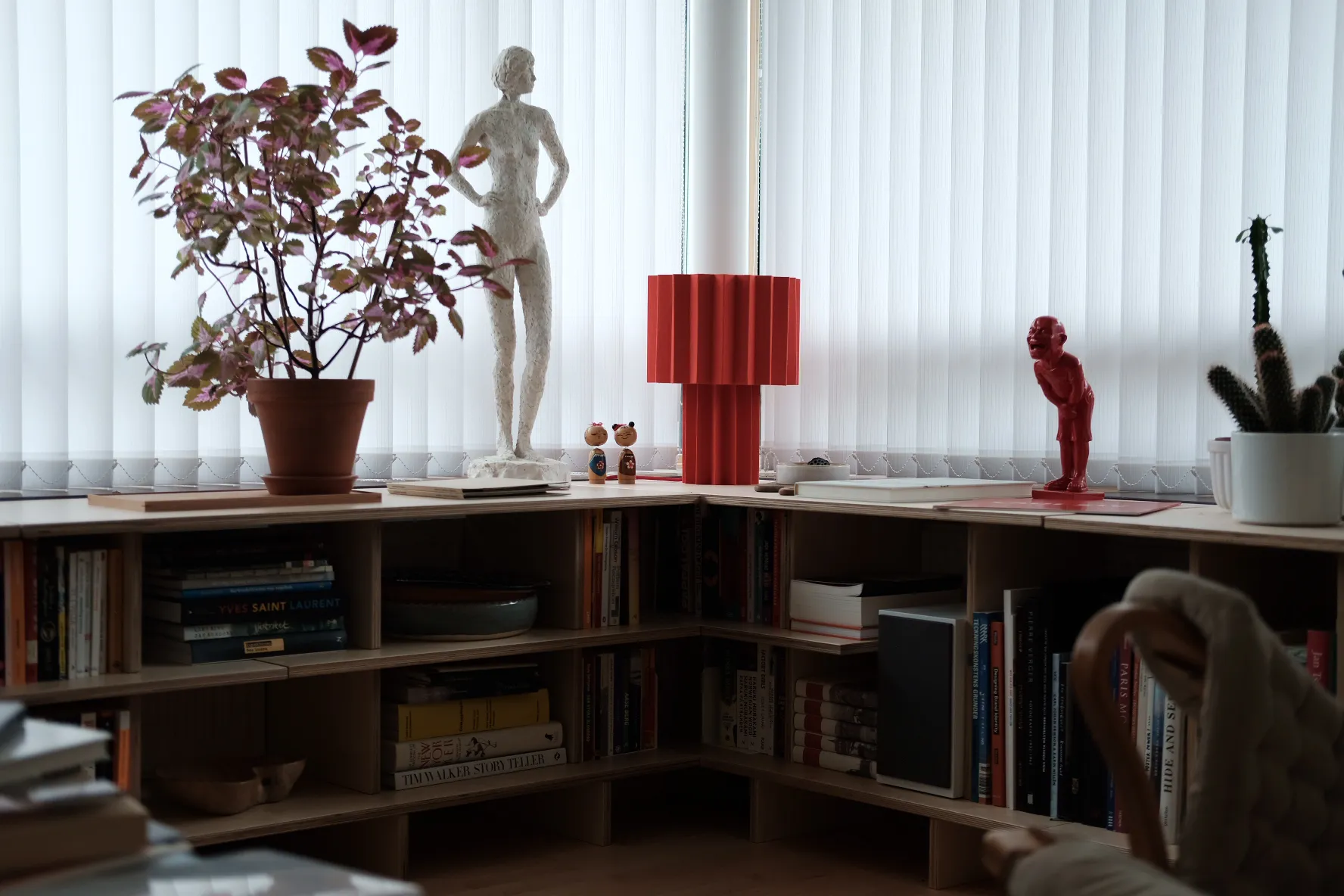
I’ve always loved books. Not only the stories they contain, but the objects themselves—well-worn paperbacks, oversized art books, beautiful spines, and the quiet personality they bring to a room. The way we choose to display our books says something about who we are, and I’ve always found that fascinating.
During my parental leave, I finally had the opportunity to explore an idea that had been sitting in the back of my mind for years: designing a bookshelf specifically for our apartment.
Our home in Stockholm was built as one of the exhibition buildings during the development of Hammarby Sjöstad. The architecture is characterized by generous windows, angled walls, and an abundance of natural light. Rather than filling the walls with tall bookcases, I wanted to embrace these architectural qualities instead of competing with them.
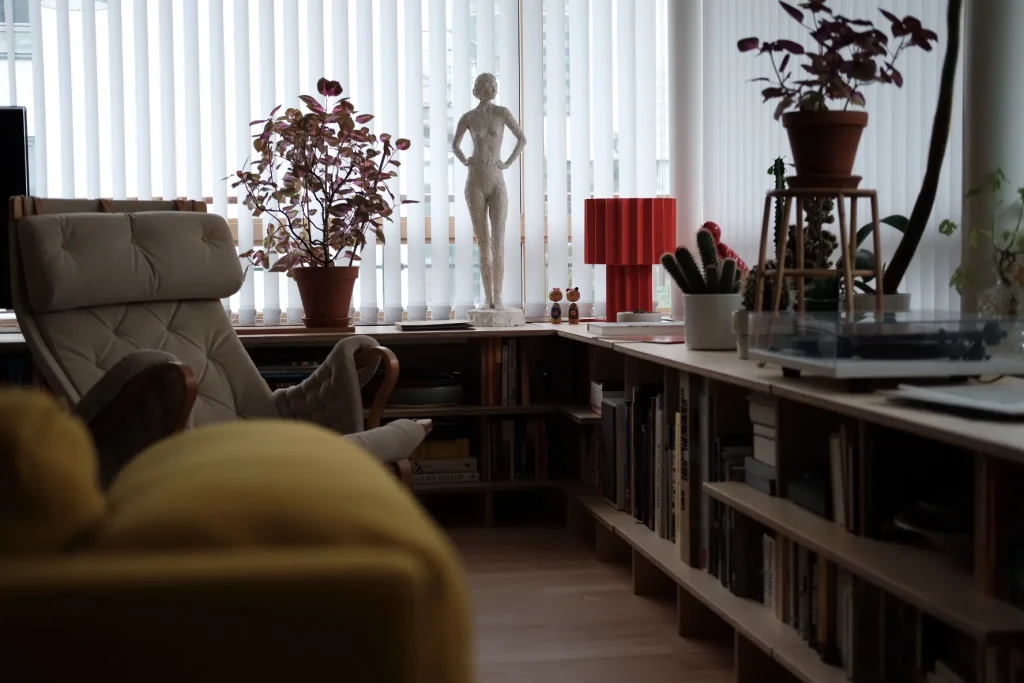
The inspiration came from Alvar Aalto’s own home in Helsinki, where low bookshelves are placed beneath the windows, allowing light to remain the dominant feature of the room. That simple idea completely changed my approach.
I began measuring every detail of the space, filling sketchbooks with concepts and exploring different construction methods. Early in the process, one principle became clear: the bookshelf should be modular, expandable, and completely freestanding. I wanted every component to lock together without screws, glue, or drilling into the apartment walls.
The solution became a system of precision-cut slot joints that allow the entire structure to assemble almost like a three-dimensional puzzle. Architectural side supports create rhythm and stability, while the center shelf can easily be removed to accommodate taller books whenever the collection grows.
Before producing the final version, I built a full-scale prototype from cardboard. Seeing the design in 1:1 quickly revealed small adjustments that were impossible to spot on paper and gave me confidence that the construction would work as intended.
Once the design was finalized, I partnered with Expohouse, a company I had previously collaborated with on exhibition projects. Together we sourced the timber, CNC-machined every component, and finished the surfaces with a durable UV lacquer.
The finished piece has become much more than a bookshelf. It extends the window sill into a generous display surface for books, plants, and everyday objects, while remaining light enough to preserve the openness of the room. Even practical details were considered—the base is elevated just enough to allow our robot vacuum cleaner to pass underneath.
This project reminded me why I enjoy designing so much. Sometimes the best ideas don’t come from a client brief or a deadline. They emerge from everyday life, curiosity, and the desire to make something just a little bit better than it was before.
Now, every time I walk past the bookshelf, I’m reminded that some of the most rewarding design projects are the ones you create for yourself.